Where Rural Life Returns to View

Within Beamish’s Georgian landscape, a once-overlooked cluster of farm buildings has been returned to use. Their partial collapse and long period of dormancy are now part of a wider story, one that traces the rhythms of nineteenth-century rural life through work, hospitality, and domestic routine.
Overview
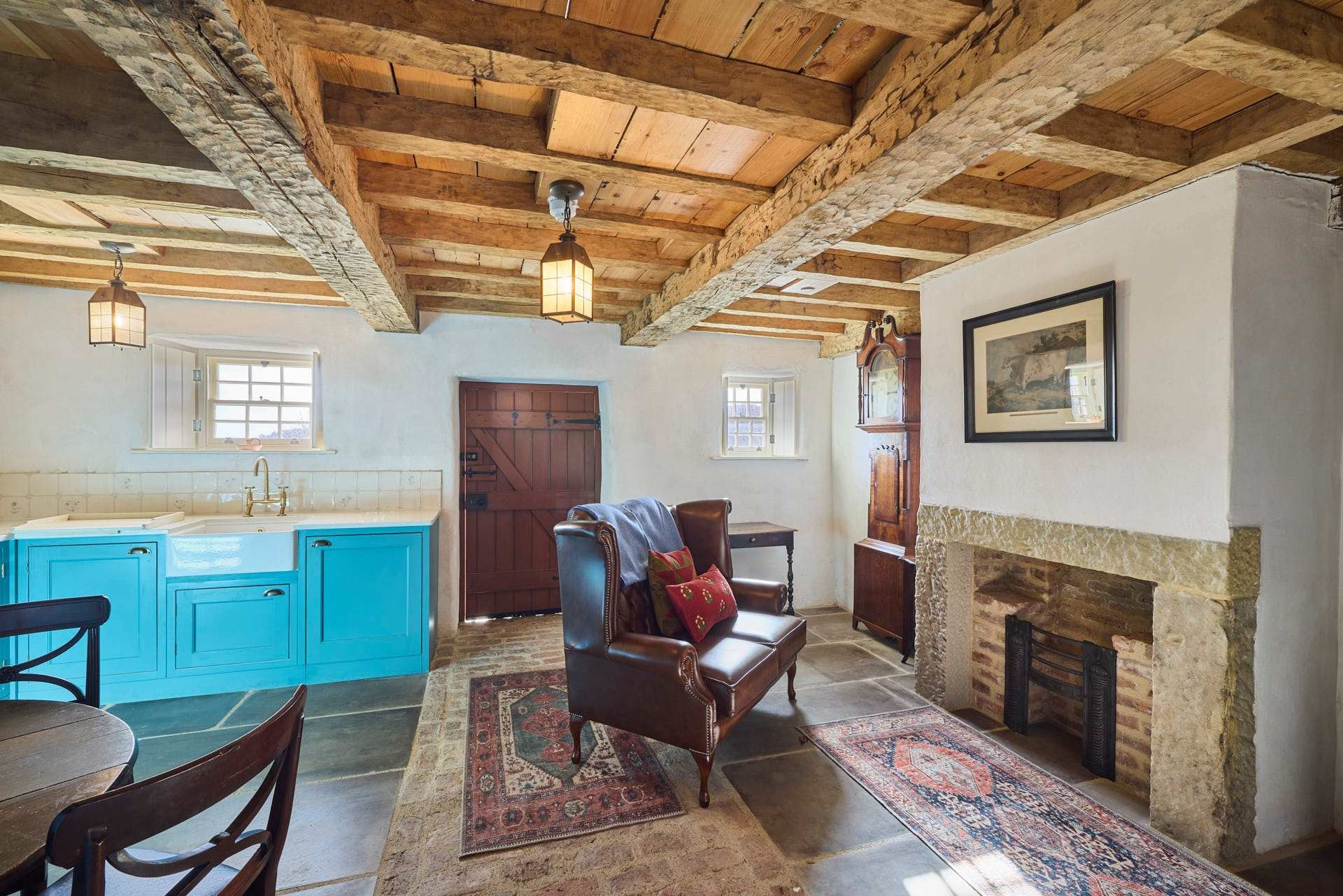
Pockerley’s latest exhibits form a key part of the wider Remaking Beamish programme, focused on reinvigorating underused areas of the museum while deepening historical understanding. Set beside the Grade II* Pockerley Pele Tower and Grade II Farmhouse, a group of late Georgian and early Victorian outbuildings have been conserved and reimagined as a Drovers Tavern, rural pottery with beehive kiln, and two holiday cottages finished as Georgian farmworkers cottages.
The project focused on the existing fabric, working with what was already in place to reveal its potential. Existing stone walls, roof forms and courtyard relationships provided the framework for a small but richly layered ensemble. The ambition was to create spaces that sit naturally within the museum landscape, supporting interpretation and visitor experience while respecting the surrounding heritage assets.
- Year 2024
- Location Durham
- Client Beamish Museum
- Project Sectors Culture & Heritage
Design Approach
From the outset, the project was rooted in understanding how these buildings once functioned together. Research by Beamish’s curatorial team and SPACE’s Conservation team, supported by archaeological advice and archival study, informed decisions at every scale, from site layout to hearth construction. Where fabric could be retained, it was repaired using compatible materials and methods. Where elements were lost, replacements were carefully designed using reclaimed or period-appropriate materials.
Modern requirements were addressed sensitively. Heating, servicing, and accessibility were integrated in a way that met contemporary standards without disturbing the historic character of the spaces. New interventions, including single-storey stone additions, were deliberately modest in form and subordinate to the original buildings.

Result
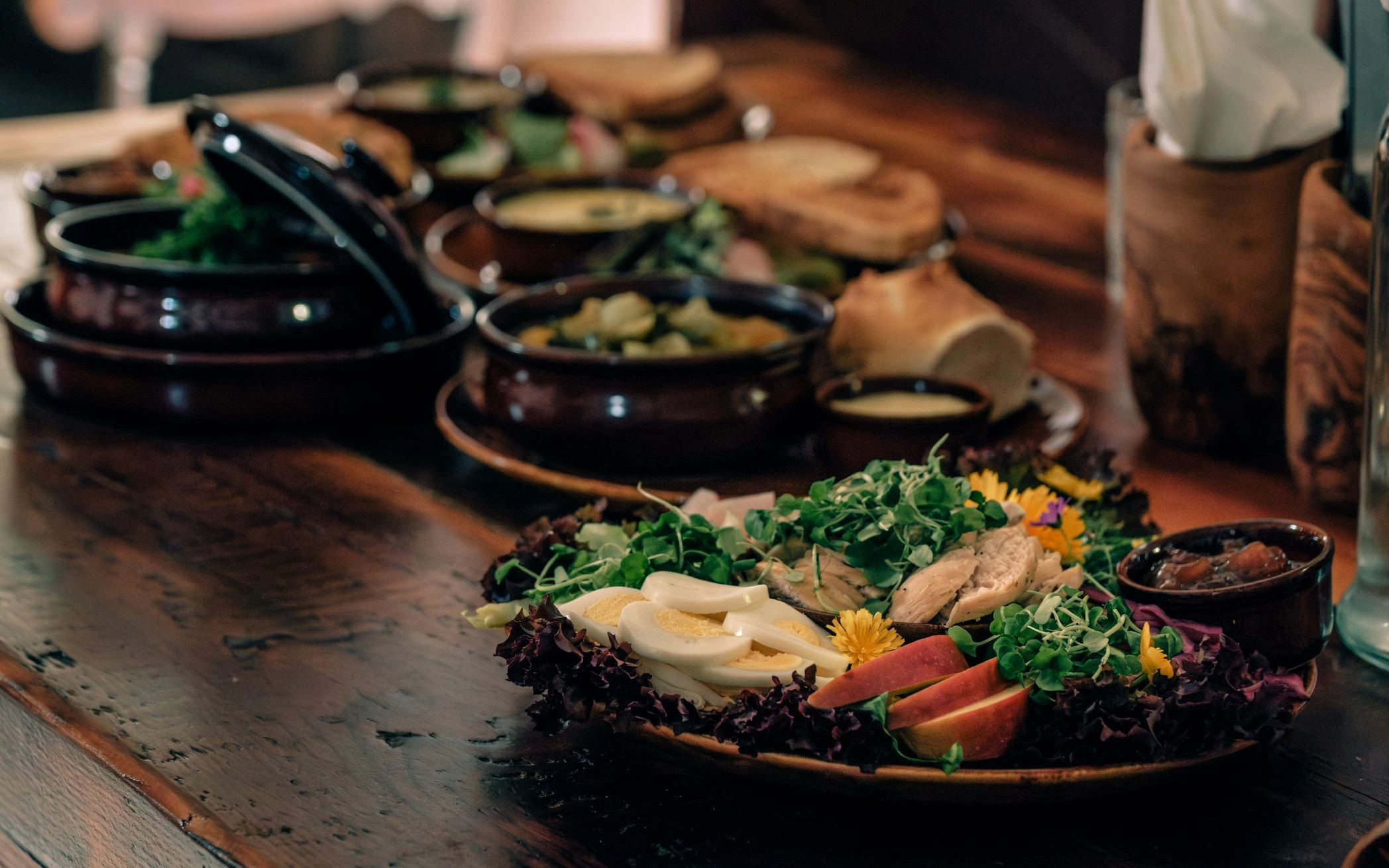
Today, Pockerley feels both familiar and newly discovered. The Drovers Tavern has quickly become a social anchor within the museum, its courtyard offering a place to pause, eat and gather. The pottery introduces a slower rhythm, drawing visitors into the processes of rural craft. The holiday cottages extend the experience beyond a single visit, allowing guests to inhabit the landscape in ways previously not possible.
The project played a considerable role within the broader Remaking Beamish programme, helping Beamish secure the title of Museum of the Year and earning national recognition with the Constructing Excellence Award for Regeneration and Conservation. These honours reflect the weight of careful conservation and long-term thinking across the site. As Helen Barker, Executive Director of Beamish Museum, observed, “Winning Museum of the Year was the icing on the cake. The development work, the community engagement, the attention to detail, it all contributed. It has been transformative for Beamish and for the region.”
Together, the buildings have transformed a quiet corner of the site into a destination in its own right, contributing to record visitor numbers and providing new income streams that support the museum’s future. Importantly, the unique atmosphere that defines Beamish remains undisturbed. The exhibits settle naturally within their setting, as though uncovered rather than newly made.


People
Work that visitors respond to instinctivelyCommunity voices were central to the project. Ongoing dialogue with the Beamish team, volunteers and local contributors ensured that stories and knowledge informed the design and delivery. Craftspeople and specialist contractors played a vital role, bringing traditional skills back into active use and, in many cases, passing those skills on through apprenticeships.
The result is work that visitors respond to instinctively. The buildings invite use rather than observation, reinforcing Beamish’s role as a place of shared experience rather than static display. Families gather at the tavern to share food and conversation, try their hand at traditional crafts, or, when staying in the holiday cottages, discover Beamish from a new perspective. Each encounter invites participation, turning each visit into a lasting memory.
Planet
Reusing existing buildings and reclaimed materialsThe project demonstrates how conservation-led work can align with environmental responsibility. Reusing existing buildings and reclaimed materials greatly reduced embodied carbon, while traditional breathable construction was paired with improved thermal performance where appropriate. Limecrete floors, hemp and lime plaster, and sympathetic insulation support long-term durability and comfort.
Energy use is intentionally modest. Large areas remain unheated, consistent with historic operations, while air-source heat pumps serve the holiday accommodation. Where open fires are essential to interpretation, modern systems are concealed within traditional forms, balancing authenticity with safety and efficiency.
Place
Deeply woven into the cultural fabric of the North EastPockerley has long held a quiet prominence within the Beamish landscape. This Remaking Beamish project reinforces its relationship to the surrounding farmstead and fields. Buildings once hidden and deteriorating are active again, supporting everyday use and quiet moments of pause.
“We’ve uncovered a hidden gem in the heart of the museum.”
Helen Barker
Executive Director of Beamish
To work within a site so deeply woven into the cultural fabric of the North East was a rare privilege. Pockerley's new exhibits feel anchored in their environment, bearing the imprint of the generations who came before alongside the thoughtful renewal that has brought them into the present.
Credits
- End User Beamish Museum
- Project Lead Phil Lloyd
- Design Team Beamish Museum Curatorial Team, BGP, Kyoob, The Archaeological Practice, Thornton Firkin, Todd Milburn
- Contractor Brims Construction Ltd
- Sub-contractors Albert Fairnington Joinery, Caldyris, Colin Stephenson Masonry, Vaughan Engineering Services Ltd, VisionCK, Wensley Roofing
- Photography Andrew Hepinstall, Elliot Harris


