A Town You Might Remember

Beamish’s 1950s Town brings the textures of post-war life to the fore, offering new exhibits that feel instantly recognisable. The streetscape, its shopfronts and interiors work together to recreate the atmosphere of a working town, allowing memories to surface naturally through everyday encounters.
Overview
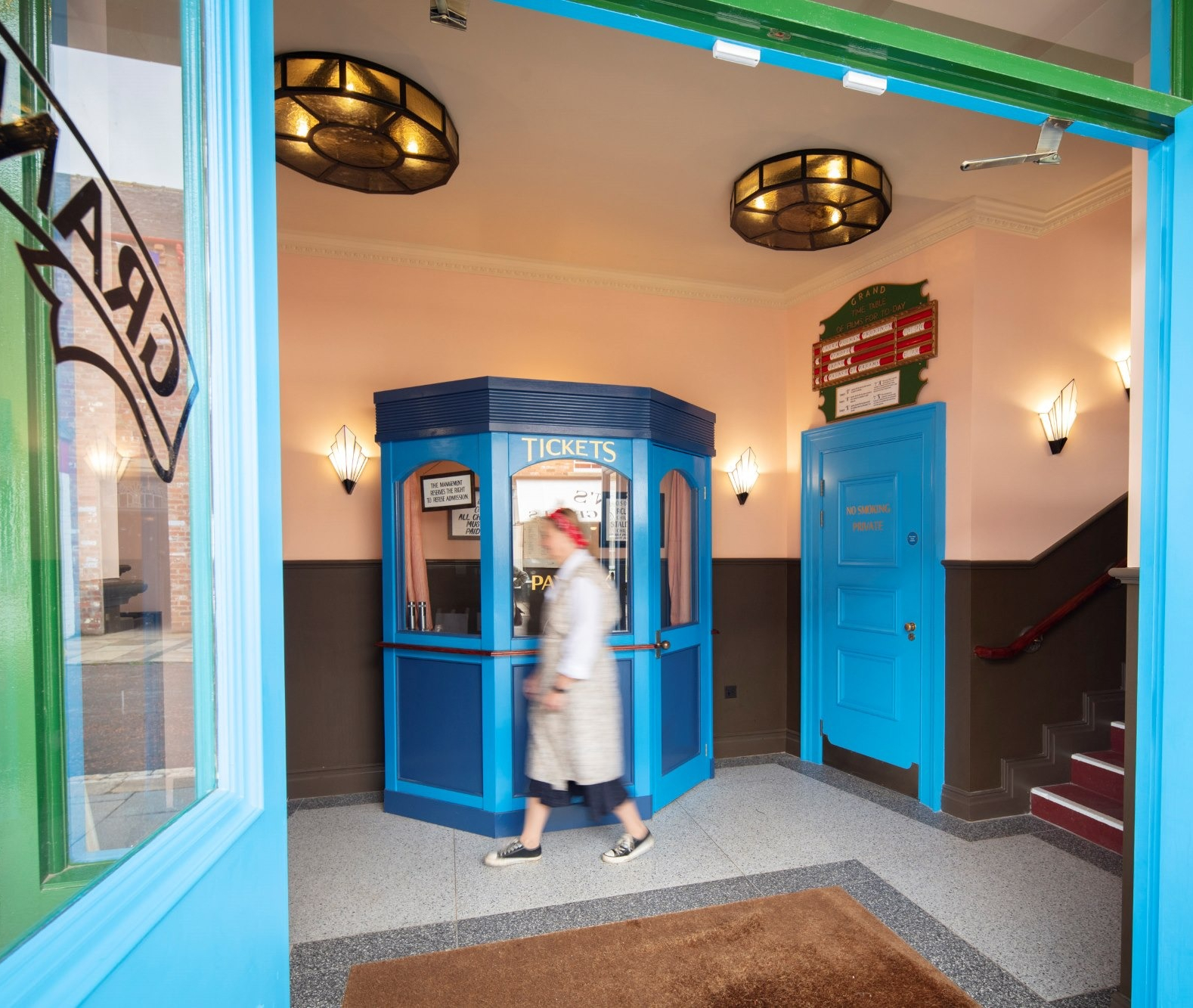
The 1950s Town forms the centrepiece of the wider Remaking Beamish programme and marks the museum’s most recent return to a period within living memory. A series of exhibits were recreated from real buildings, photo archive evidence and personal accounts from across the North East, including the 300-seat Grand Cinema from Ryhope, a toy shop, radio and electrical store with record shop above, a Milk Bar and a STEM learning space, alongside supporting streets and outdoor areas.
Rather than producing isolated replicas, the project focused on creating a coherent townscape. Each building holds its own story, but together they form an authentic environment where social, commercial and cultural life intersect. The result tells a collective story of 1950s North East social history that encourages conversation across generations, where recognition and recollection become part of the visitor experience.
- Year 2024
- Location Durham
- Client Beamish Museum
- Project Sectors Culture & Heritage


Design Approach
Authenticity was the guiding principle. Early research drew heavily on archival photography, manufacturer catalogues, oral histories and detailed surveys of the original cinema prior to dismantling. Community engagement played a vital role, with a former projectionist, shop workers and local families contributing memories that informed everything from seating layouts to interior finishes.
Design decisions balanced historical accuracy with modern requirements. The cinema was subtly reduced in footprint to improve intimacy, while concealed circulation and servicing ensure accessibility and safety without disrupting period character. Throughout, modern interventions were used sparingly and only where they could remain unseen, allowing materials, colour and proportion to carry the narrative.
Result
The opening of the 1950s Town has had an immediate and lasting impact. Visitors arrive with expectation and leave with recognition, often sharing stories prompted by familiar interiors and objects. The cinema has quickly become a focal point, supporting screenings, events and wider community use, while the shops and Milk Bar bring energy and sociability to the street.
The success of the 1950s exhibits has played a significant role in the wider recognition of the Remaking Beamish programme. The project contributed to Beamish Museum being awarded The Art Fund Museum of the Year in 2025. As Executive Director of Beamish Helen Barker reflects, “Winning Museum of the Year was the icing on the cake. The development work, the community engagement, the attention to detail, it all contributed. It has been transformative for Beamish and for the region.”


People
Exhibits that resonate across generationsThe 1950s Town was informed by lived experience. Community contributors were justly listened to, ensuring that personal memories influenced decisions large and small. This approach allowed the exhibits to resonate across generations, creating moments where visitors recognise their own histories in the spaces around them.
For the Beamish team and volunteers, the new town has expanded opportunities for interpretation, learning and outreach. From school groups to wellbeing programmes, the spaces support a wide range of uses beyond traditional display. This sense of care and personal investment extended into the design process itself, with SPACE Associate Architect Carinna Gebhard contributing a family heirloom to one of the interiors. A light fitting, carefully selected to suit the room, now forms part of the town’s fabric, a quiet but meaningful reminder of the personal connections that underpin the project.
Planet
A balance between appearance and performanceWhile appearing firmly rooted in the mid-twentieth century, the buildings quietly meet modern performance standards. Insulated fabric and passive heating and ventilation ensures efficient operation, while an air source heat pump–driven district heating system serves the cinema and shops, as well as several of the other 1950s buildings, with provision for future connections across the site.
This balance between appearance and performance allows the town to function effectively year-round, reducing reliance on fossil fuels while maintaining the authenticity that defines the experience.
Place
Memory is activated through experience and familiarityThe 1950s Town brings a different cadence to the Beamish landscape. Its street feels vibrant and social, echoing a period defined by shared routines and public life. Visible from vantage points across the wider museum, it acts as both destination and connector, drawing visitors deeper into the site.
The town acts as a place where memory is activated through experience, conversation and familiarity, reaffirming the museum’s role as a living record of the region’s past.
Credits
- End User Beamish Museum
- Project Lead Carinna Gebhard
- Design Team Beamish Museum Curatorial Team, BGP, Kyoob, Thornton Firkin, Todd Milburn
- Contractor Brims Construction Ltd
- Sub-contractors Bespoke Concrete, Clement Windows, Kirwin Simpson, Ornate Interiors, Picto, TManners, Ulster Carpets, Vaughan Engineering Services Ltd, Wensley Roofing
- Photography Andrew Hepinstall, Elliot Harris


