A Civic Interior for Public Life

The Farrell Centre is a civic asset created through the careful adaptation of the former Claremont Buildings. Working closely with Newcastle University and Elliott Architects, the project transforms a disused Grade II-listed department store into the UK's first purpose-designed urban room.

Overview
The Farrell Centre is conceived as a public setting where architecture can be explored, questioned and experienced by all. Commissioned in response to the 2014 Farrell Review, the building brings together galleries, learning spaces and open rooms that encourage people to consider how cities evolve and how design influences everyday life. Its renewed interiors reveal the building’s layers, pairing restored historic elements with contemporary interventions. This thoughtful reinvention received a 2025 RIBA North East Award, recognising the project’s commitment to cultural engagement and the careful stewardship of a listed structure. The Centre now stands as a visible expression of Sir Terry Farrell’s legacy, continuing his belief that the built environment should be understood, debated and shared by the communities it serves.
- Year 2023
- Location Newcastle Upon Tyne
- Client Newcastle University
- Project Sectors Culture & Heritage


Design Approach
Developed through creative collaboration between architects, curators and the client team, the scheme balances conservation with contemporary use. As the RIBA North East jury noted, the Farrell Centre is “a tale of two halves,” where careful restoration and confident intervention work together to create something both familiar and entirely new.
The project preserves the building’s original frontage while a new pedestrian forecourt to the south-west creates space for arrival and gathering. More significant adaptations had been made within the 1905 extension, where fewer historic features remained. This gave the design team an opportunity to form a new contemporary entrance, mirrored to the east, establishing a clear route through the building and activating its public edges.
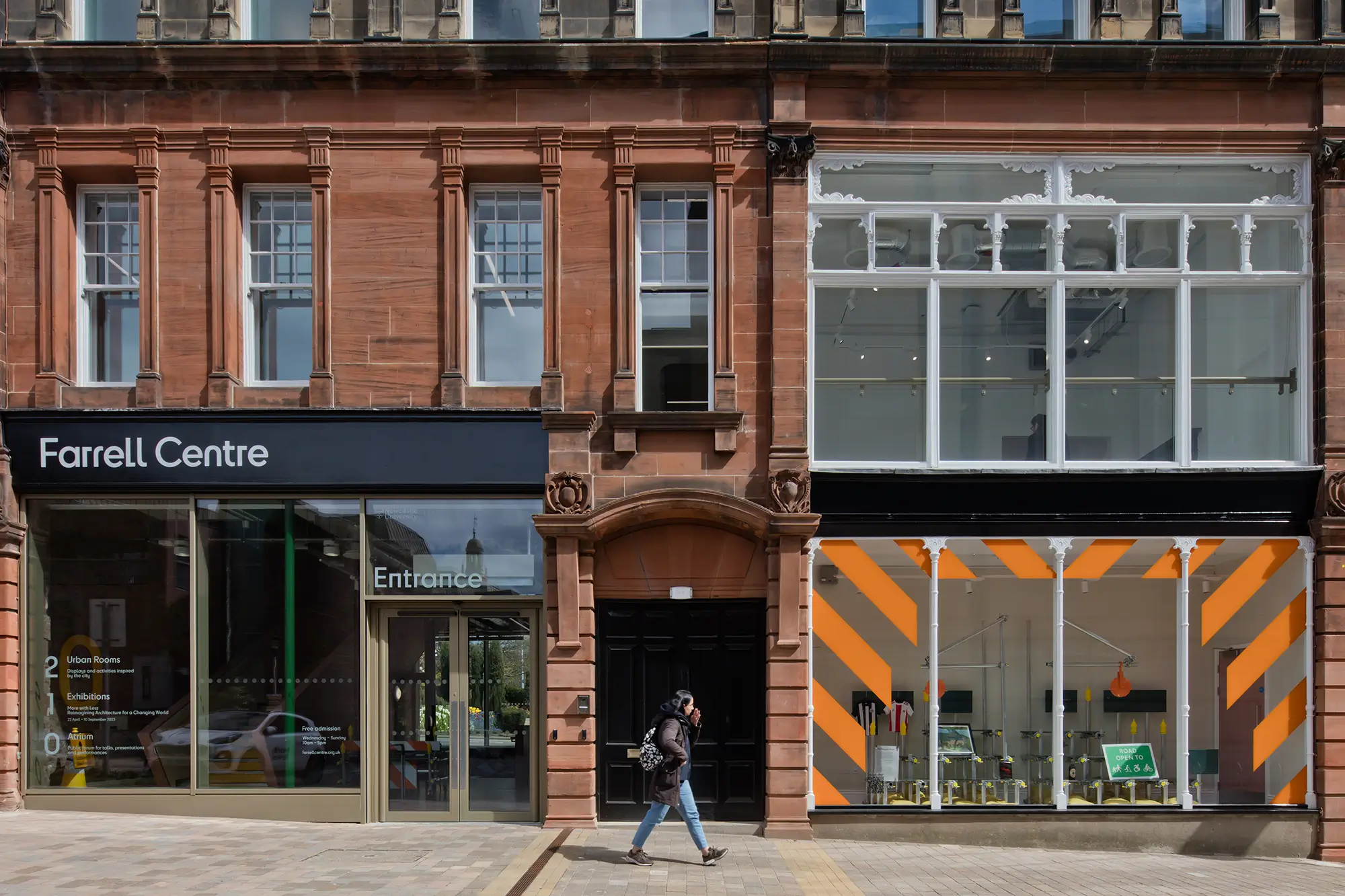
Inside, the ground floor includes a sunken seating area created by opening the floor into the basement, offering a visible and inviting space for discussion. A brightly coloured accommodation stair threads upward through the building, drawing visitors to the gallery spaces and urban rooms above. The stair’s geometric language provides a playful counterpoint to the exposed brickwork, retained fireplaces and visible structural elements, highlighting the building’s layered history. Accessibility was central to the design. A lift inserted into the existing lightwell maintains the building’s spatial logic while ensuring full access to all floors. Glass landing doors preserve borrowed light and reveal the original glazed brickwork within the shaft.


Result
Since opening, the Farrell Centre has delivered a varied calendar of exhibitions, lectures, workshops and civic events for visitors of all ages. It has quickly become a place where communities can meet, debate and learn together, supported by a sequence of spaces that are flexible and easy to navigate. The building’s sunken gathering space and upper-level urban room have become active settings for conversation, learning and public exchange.
The Centre has received multiple awards, including a 2025 RIBA North East Award and the Lord Mayor’s Design Award for Conservation, recognising the clarity of its design, the careful retention of historic fabric and the ambition of its public mission. Its programme continues to grow, with exhibitions that address the changing city, events for younger audiences and partnerships with local schools, architectural practices and community groups.
The project stands as evidence of how shared endeavour can create a resource that feels resonant and enduring, offering a civic setting that supports curiosity and the open exchange of ideas.


People
A space where public life and architectural thinking meetThe Farrell Centre was conceived as a space where public life and architectural thinking could meet. From the earliest stages, this aim defined how the building was designed and how it functions today. Conversations around how the public would use the building informed everything from the arrangement of the galleries to the placement of the entrance, sunken seating and internal routes.

Everything from spatial arrangement to material language was carefully considered to enhance visitor engagement. The welcoming entrance sequence and layered galleries invite visitors to move at their own pace, whether they are encountering architecture for the first time or returning to explore new ideas. For local residents, students, families and tourists alike, the Centre provides an accessible environment where learning feels informal and inclusive. It stands as a meeting point for people to meet, reflect and connect with the evolving story of Newcastle.
"Chris from SPACE and Ben from Elliott Architects made a great team. From the beginning, they understood what we wanted to achieve with the project and were always willing to engage in creative dialogue about everything from the planning and arrangement of rooms to material and colour choices. That we have got such a distinctive building encapsulating the ethos of the centre at the end of the process is testament to their vision, ingenuity and patience."
Owen Hopkins
Director, The Farrell Centre
Planet
Walls, floors and structural features; revealed rather than replacedWhile the Farrell Centre is primarily civic in function, environmental sensitivity informed the strategy and execution of the design. Working with the constraints of a listed structure, the project team retained as much of the existing fabric as possible. Walls, floors and structural features were revealed rather than replaced. This approach reduced material use and embodied carbon while preserving the building's layered identity.
The environmental approach was fabric-led, with targeted improvements to glazing, insulation and energy systems. A new lift was introduced without altering the footprint, and the plan allows for cross-ventilation through the central atrium and new openings. Where possible, daylight was brought into basement areas and circulation routes, reducing the demand for artificial lighting.
Materials were chosen for durability and balance. The exposed brick, retained chimney pieces and timber floors work in contrast with more playful interventions, including the geometric stair and colourful infill panels. This contrast is deliberate, drawing attention to what is old and what has changed.
Sustainability at the Farrell Centre is visible and structural. Rather than layering new technologies onto a compromised shell, the building works with its constraints and responds to them in kind. The result is a building that adapts without excess.
Place
Sitting between the city's civic quarter and its cultural institutionsThe iconic site had stood vacant for years. The design approach did not overwrite this history but worked with it. The retained façade holds the rhythm of the original department store, while the reconfigured rear elevation deepens the relationship between the building and its setting. The Farrell Centre sits at a threshold between campus and city, acting as a visible marker of Newcastle’s architectural culture. The new entrance, open at both ends, strengthens connections through the site and allows people to move freely between the university and the wider city. The forecourt, active frontages and clear internal routes make the building approachable from every direction.
The project is grounded in a civic idea first championed by the late Sir Terry Farrell: that cities deserve dedicated spaces where the built environment can be openly debated and explored. Imagined as the UK's first purpose-designed urban room, the Farrell Centre embodies this ambition. As described by the RIBA jury, this is a "joyful and visually welcoming" space designed to include rather than instruct.
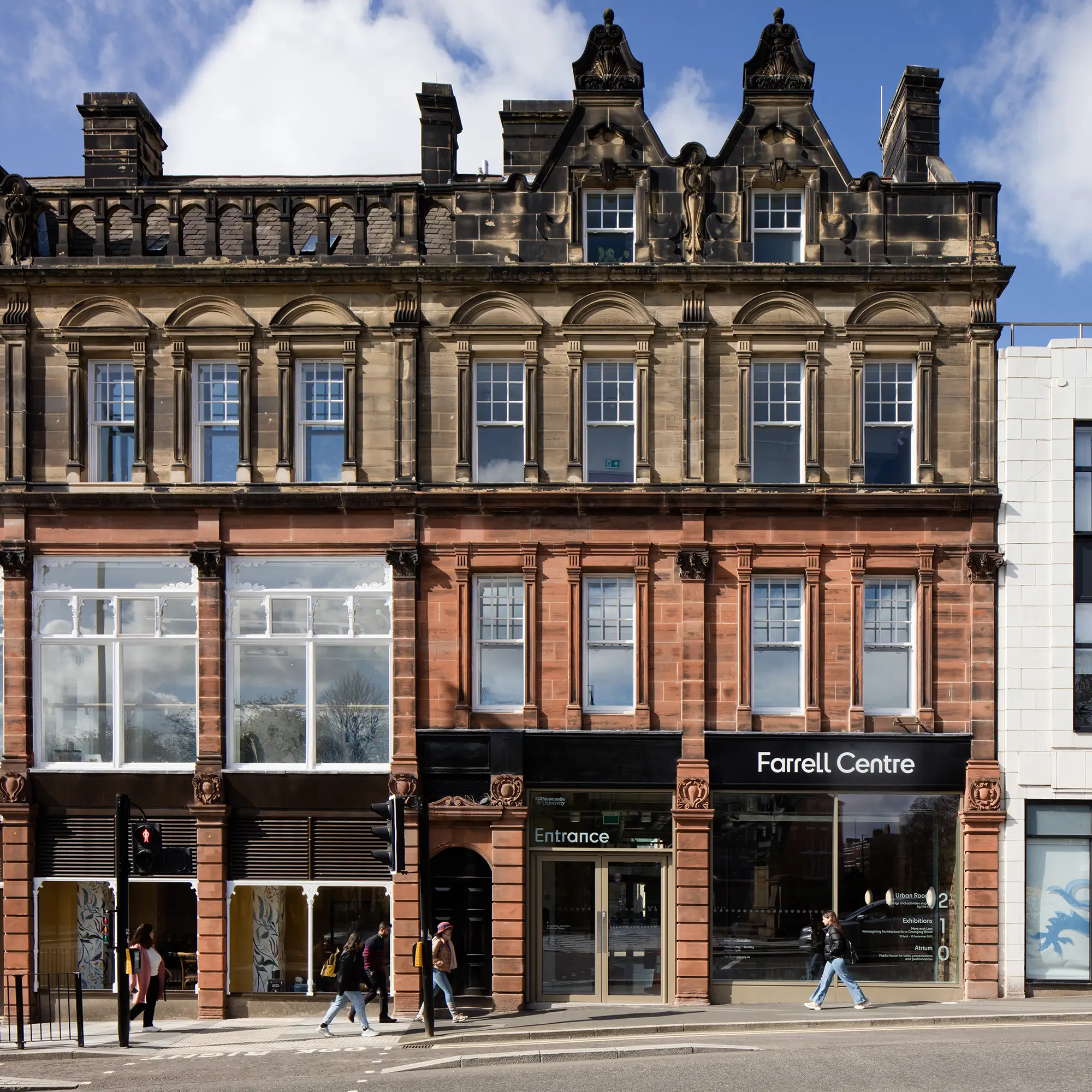
The Farrell Centre stands as a cultural meeting point that encourages dialogue, celebrates architectural learning and brings people together to consider the shape of their city. Its layered palette of historic surfaces and contemporary additions captures the character of Newcastle itself, where heritage and innovation coexist.
Credits
- End User Newcastle University
- Project Lead Chris Holmes
- Design Team Cundall, Currie & Brown
- Contractor Robertson Construction
- Photography Kristen McCluskie


